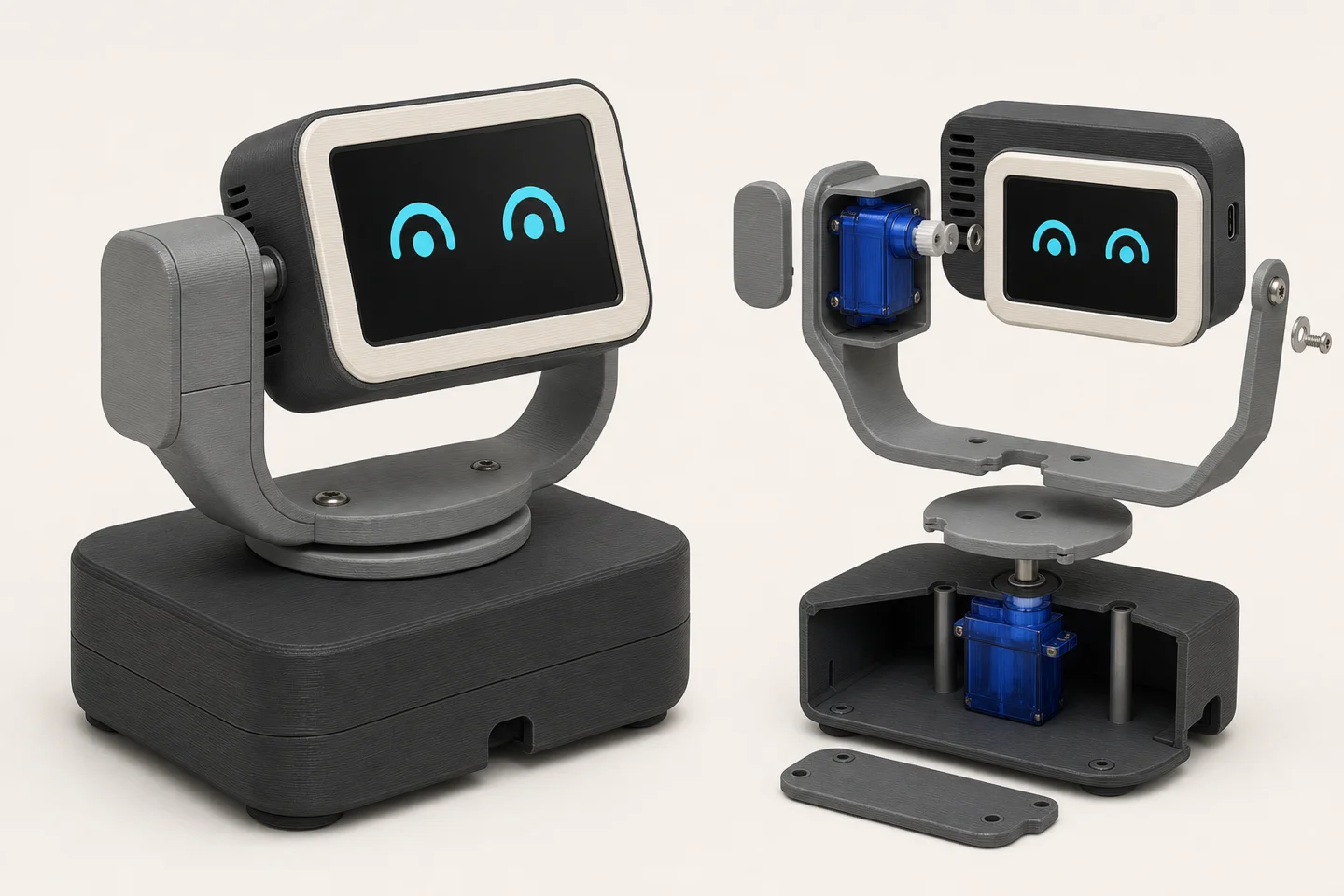
Start with the face
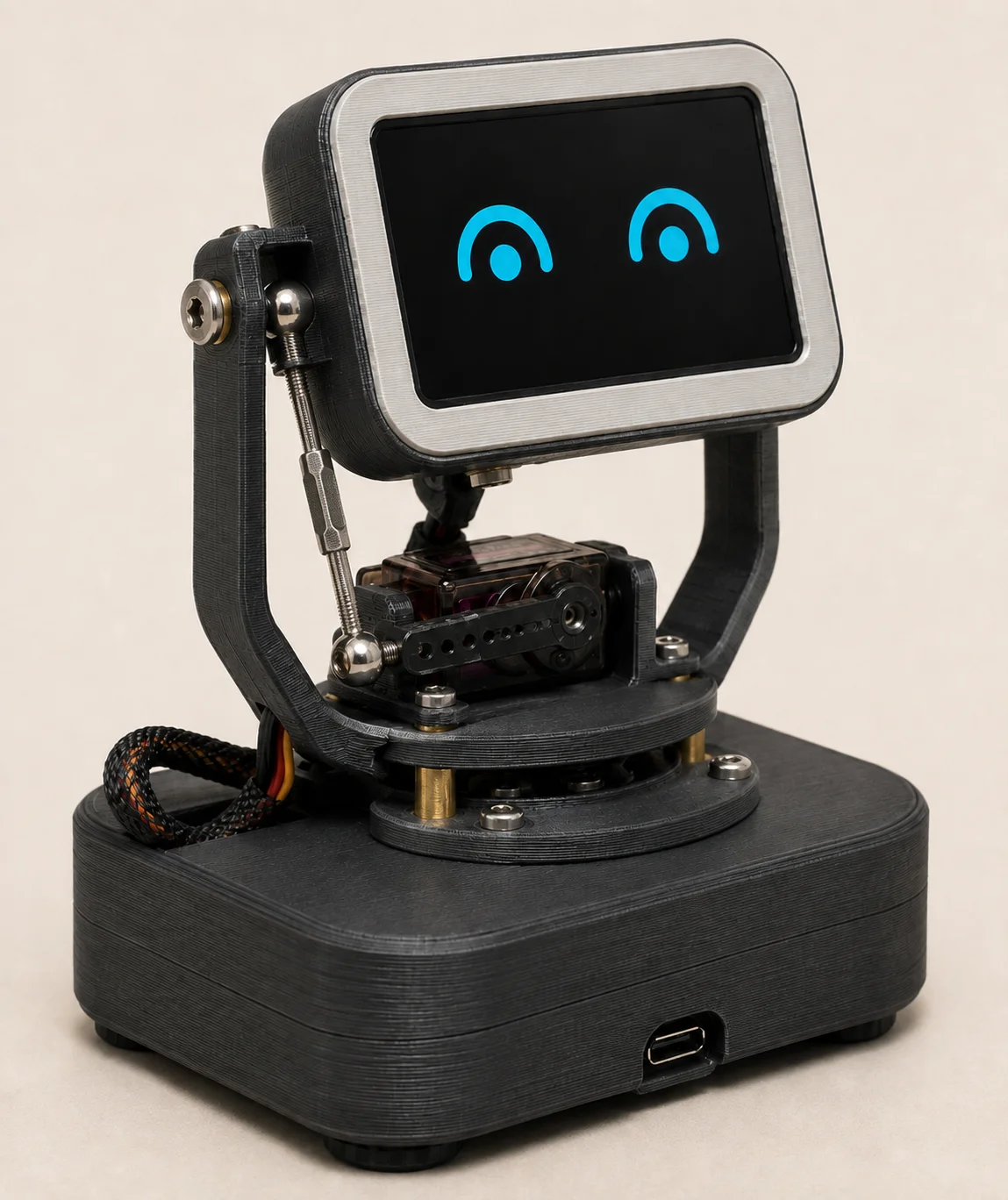
Everything started with a small AMOLED screen and a pair of eyes. The body had one job: hold that face, leave its connectors reachable, and let it look up, down, and sideways. A conventional yoke was one answer. An oval halo was a much stranger one.
Try a different silhouette
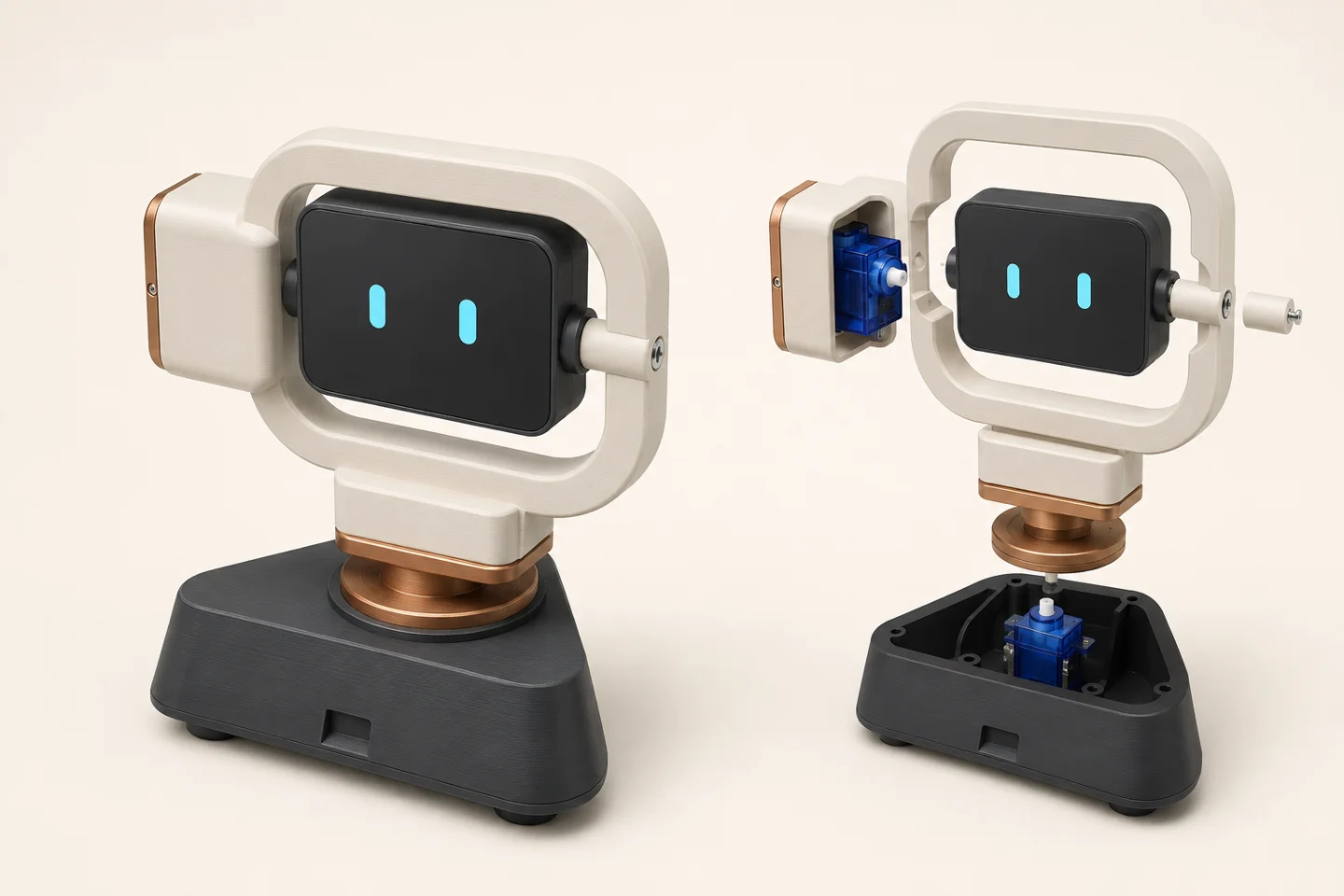
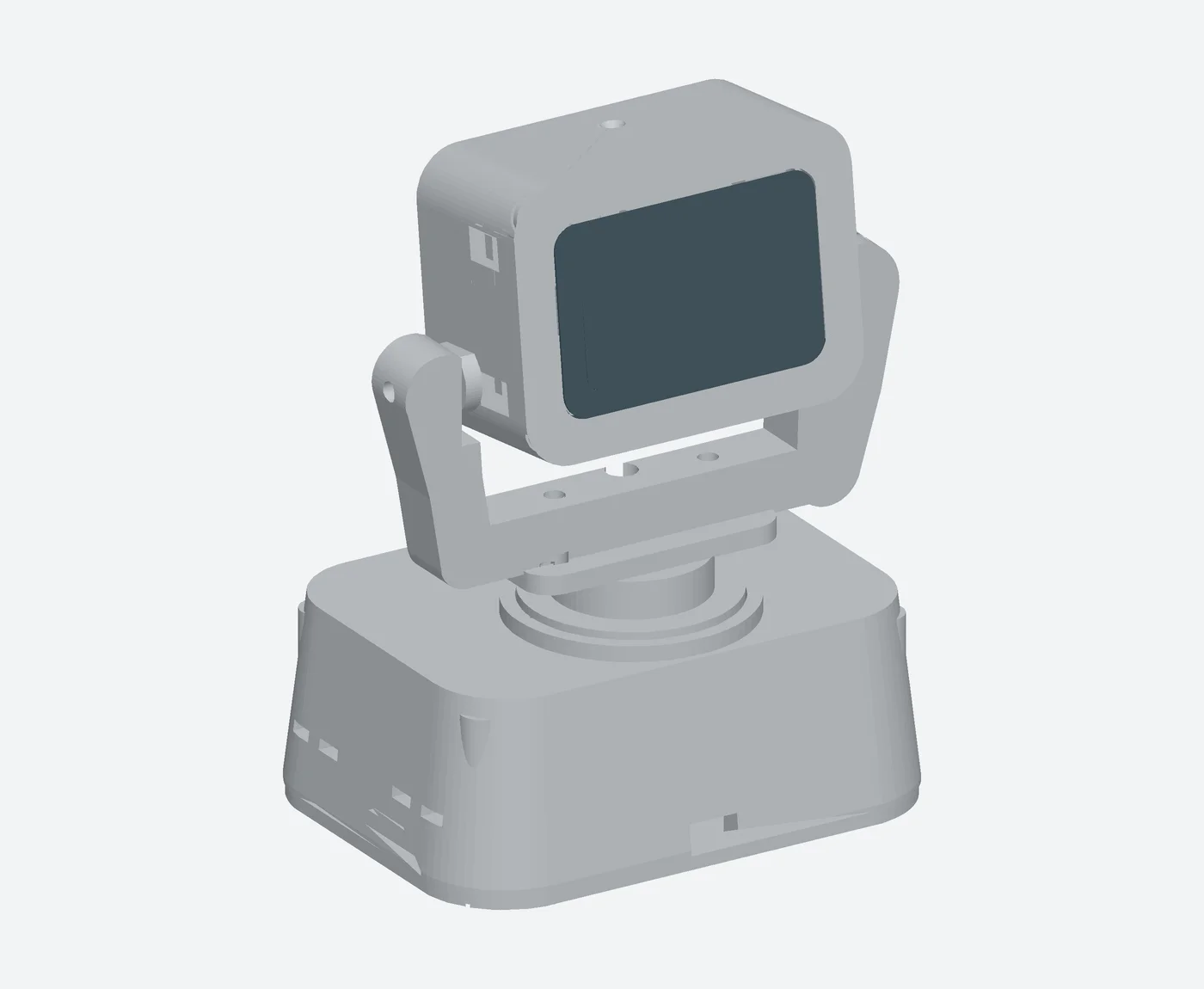
Orbit Halo hung the landscape screen inside a complete oval gimbal on a tapered three-point base. The servo landscape designs used a more familiar bracket. These were rivals, not generations: I was drawing alternatives side by side, not improving one design in a straight line.
Make the package smaller
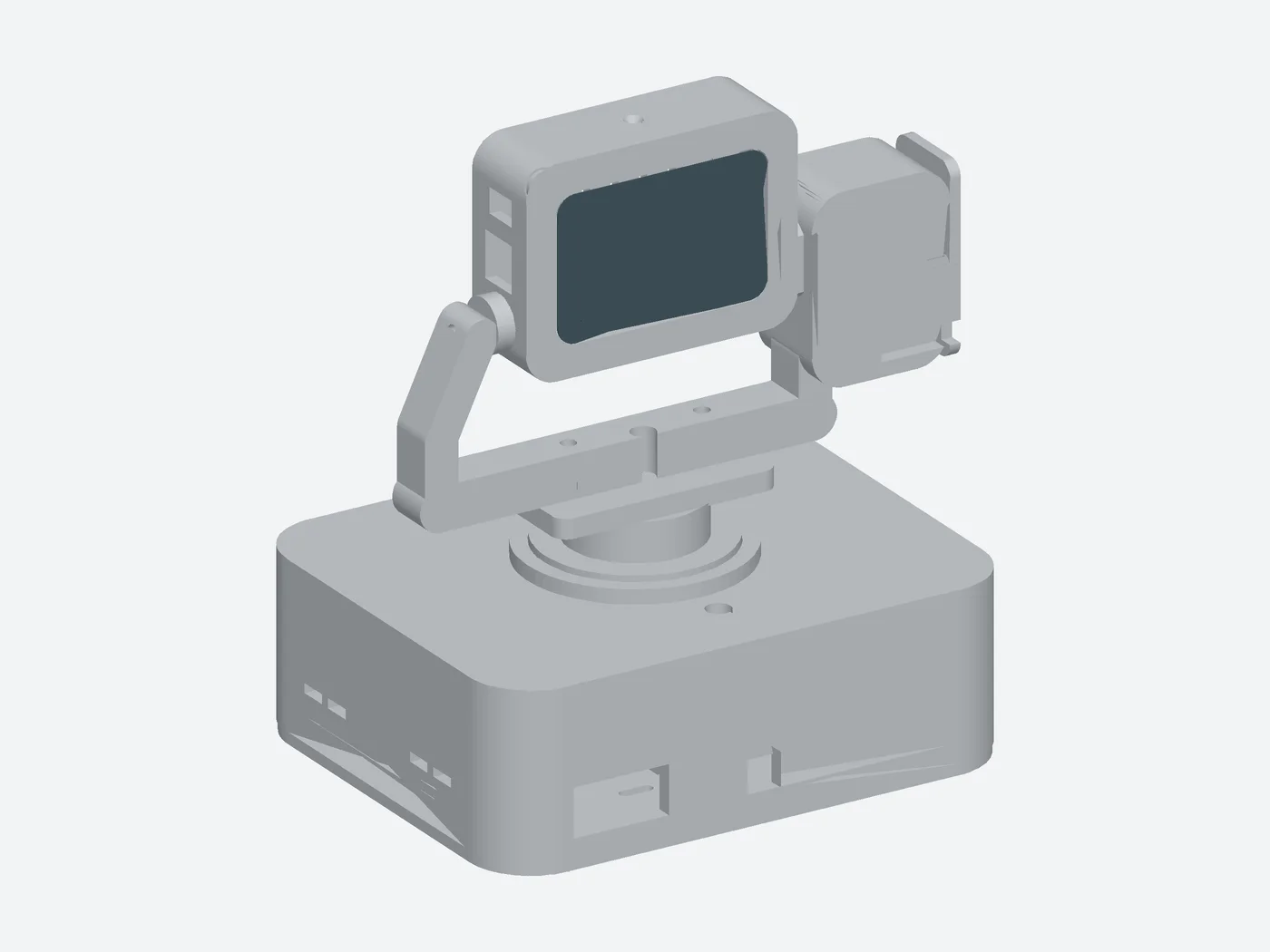
Then I went after a smaller package. The soft compact revision moved the tilt servo inside the head and shrank the proposed base to 82 by 62 mm. The CAD also tried a rear USB extension and a removable bezel. Smaller has a price: access, wire loops, and the fit of bought parts all start to matter a lot more.
What's real here
Nothing in this chapter was printed, assembled, or tested. The gray previews are modeled geometry, and the styled pictures are appearance studies. The battery bays and enclosed bodies you can see here are not part of the working prototype.